




Nike Is Getting Sued for Their Email Marketing: A Wake-Up Call for Marketers
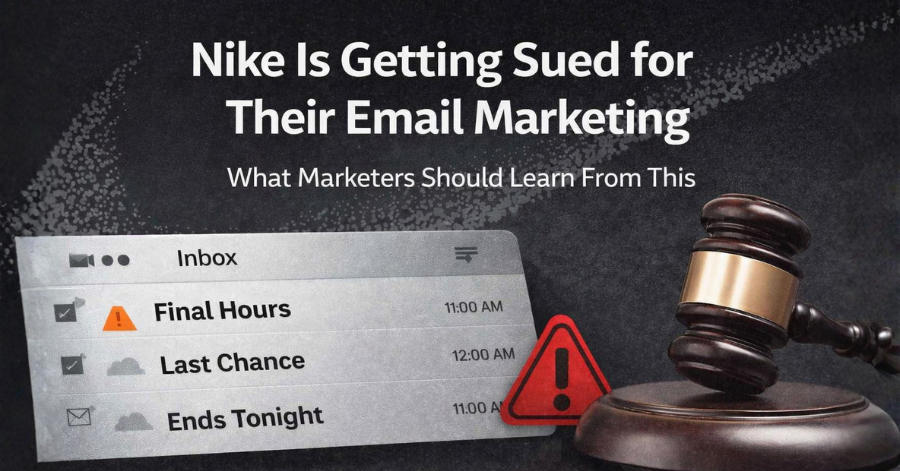
A recent lawsuit involving Nike has sparked an important conversation about deceptive email marketing practices. The case highlights how commonly used marketing tactics – particularly those involving fake urgency – are now being legally challenged.
According to the allegations, Nike promoted a Black Friday sale through email campaigns that suggested the promotion was about to end. Customers received subject lines that created urgency, encouraging them to act quickly before the offer expired. However, once the Black Friday promotion supposedly ended, the same offer was reportedly reintroduced as a Cyber Monday sale, effectively extending the promotion while maintaining similar messaging.
Many of the emails included phrases such as:
- ● “A few hours left”
- ● “Ends tonight”
- ● “Final chance”
These subject lines are designed to trigger urgency and push customers to complete purchases quickly. The problem arises when the urgency is not genuine. In this case, customers were told the promotion was ending soon, but the sale allegedly continued for several additional days.
The legal discussion intensified when the Washington Supreme Court ruled that creating false urgency in marketing emails can be considered illegal under consumer protection laws. The ruling suggests that misleading marketing tactics – especially those that pressure customers into making time-sensitive purchasing decisions – can violate regulations meant to protect consumers.
Under Washington law, penalties for deceptive marketing can reach $500 per email sent. For large corporations, this may not represent a significant financial burden. However, for smaller companies or businesses that send large-scale campaigns, the cumulative penalty could become substantial.
Nike is not the only company facing scrutiny over these tactics. Reports indicate that more than 20 brands have been targeted in similar lawsuits, including well-known retailers such as:
- ● Macy’s
- ● Skechers
- ● Discount Tire
The broader takeaway is that false scarcity and misleading urgency are becoming legal risks, not just marketing shortcuts.
For years, many brands have relied on urgency-driven messaging like countdown timers, “last chance” subject lines, and limited-time sales that quietly extend beyond their stated deadlines. While these tactics can temporarily increase conversions, they may ultimately damage customer trust and expose companies to regulatory scrutiny.
The solution is surprisingly simple: use real scarcity instead of artificial urgency.
Brands can create genuine urgency through strategies such as:
- ● Limited-quantity product drops
- ● Exclusive product launches
- ● Clearly defined and enforced sale deadlines
- ● Time-bound promotions that actually end when promised
When scarcity is authentic, customers begin to trust the brand’s messaging. Over time, this trust strengthens the relationship between businesses and their audiences.
In today’s marketing landscape, transparency and honesty are no longer optional – they are becoming essential for both brand reputation and legal compliance.
Email Marketing Best Practices: Avoid Fake Urgency and Build Real Trust
Email marketing continues to be one of the most effective digital marketing channels for driving conversions and maintaining customer relationships. However, as the recent legal challenges demonstrate, marketers must be careful about how promotions are communicated.
Using urgency responsibly can encourage customers to act quickly, but misleading tactics can harm brand credibility and potentially violate consumer protection laws. Businesses should therefore adopt ethical email marketing strategies that prioritize transparency, accuracy, and customer trust.
Below are several key practices that can help brands run effective and compliant email campaigns.
1. Use Genuine Deadlines
One of the most important principles in promotional email marketing is ensuring that sale deadlines are real and clearly enforced.
When a brand communicates that a promotion will end at a specific time, customers expect that deadline to be honored. If the same promotion continues after the announced end date – often under a different name – it can create the impression that the urgency was fabricated.
To maintain credibility, businesses should:
- ● Clearly specify the exact end date and time of a promotion
- ● Ensure that the sale actually ends when promised
- ● Avoid repeatedly extending the same promotion without transparency
- ● Communicate clearly if a promotion must be extended
For example:
- ● ✔ “Black Friday Sale Ends Friday at 11:59 PM”
- ● ✖ “Last Chance Today” – when the same sale continues the following day.
Real deadlines reinforce authenticity and make promotional messages more effective over time.
2. Avoid Misleading Subject Lines
The subject line is often the most influential element of an email campaign. It determines whether recipients open the email and engage with the offer.
However, subject lines should always accurately reflect the promotion being offered. Misleading urgency may improve short-term open rates but can damage long-term customer relationships.
Marketers should ensure that:
- Subject lines reflect the actual timeline of the promotion
- Urgency phrases are used only when they are factually correct
- Promotional language remains clear and transparent
Examples of misleading subject lines include:
- ● “Only 2 Hours Left”
- ● “Final Chance Today”
- ● “Last Call – Ends Now”
More transparent alternatives include:
- ● “Black Friday Sale Ends Tonight”
- ● “48 Hours Left in Our Holiday Sale”
- ● “Weekend Deal – Ends Sunday”
When customers trust the accuracy of subject lines, they are more likely to engage with future emails and respond to genuine offers.
3. Create Real Scarcity
Scarcity is one of the most powerful psychological triggers in marketing. When customers believe that a product or promotion is limited, they are more likely to act quickly.
However, scarcity must be authentic to remain effective.
Instead of creating artificial limitations, businesses should focus on genuine scarcity strategies such as:
- ● Limited inventory products
- ● Exclusive product releases
- ● Early-access promotions for subscribers
- ● Flash sales with clearly defined timeframes
Examples of real scarcity include:
- ● “Only 100 units available”
- ● “Limited edition drop”
- ● “Sale ends Sunday”
In contrast, phrases such as “Only a few left” can become misleading if the product inventory is not actually limited.
Authentic scarcity motivates purchases while maintaining transparency and trust.
4. Maintain Consistency Across Marketing Channels
Promotional messaging should remain consistent across all marketing channels. When customers receive conflicting information, it can quickly undermine credibility.
For example, if an email claims that a sale “ends tonight”, but the website continues to promote the same sale several days later, customers may feel misled.
To avoid this issue, businesses should ensure alignment across:
- ● Email campaigns
- ● Website banners and landing pages
- ● Social media promotions
- ● Paid advertisements
Maintaining consistency ensures that customers receive accurate information regardless of where they encounter the promotion.
5. Be Transparent When Extending Promotions
There are situations where businesses may need to extend a promotion due to unexpected demand or logistical considerations. While extensions are not inherently problematic, they should be communicated transparently.
Instead of pretending the extension was part of the original timeline, brands should openly acknowledge the change.
For example:
Transparent approach:
- ● “Due to high demand, we’re extending our sale for another 24 hours.”
Misleading approach:
- ● Sending multiple emails claiming “Final Hours” across several days.
Being honest about promotion extensions helps preserve customer confidence and brand integrity.
6. Focus on Long-Term Customer Trust
While urgency-based marketing tactics can produce short-term sales spikes, sustainable growth depends on long-term customer relationships.
When customers repeatedly encounter misleading promotions, they may begin to:
- ● Ignore marketing emails
- ● Wait for the next “sale” rather than buying immediately
- ● Lose trust in the brand’s messaging
Brands that focus on ethical marketing practices tend to see stronger long-term results, including:
- ● Higher email engagement rates
- ● Increased customer loyalty
- ● Improved brand reputation
- ● Reduced legal and compliance risks
Trust is one of the most valuable assets a brand can build, and transparent marketing plays a critical role in maintaining it.
Final Thoughts
Urgency and scarcity are powerful marketing tools, but they must be used responsibly.
The recent lawsuit involving Nike shows that misleading promotional tactics can lead to both legal risks and damage to brand reputation. As consumer protection regulations tighten, businesses must ensure that their marketing messages remain accurate, transparent, and aligned with ethical marketing standards.
Ultimately, the most effective strategy is also the simplest: be honest with your customers. When urgency is real and promotions are communicated clearly, customers learn to trust your brand—and that trust becomes a powerful driver of long-term growth.
Strong email performance also depends on how the email is designed and structured. Clean layouts, clear CTAs, and visually engaging content can significantly improve engagement, helping brands generate more clicks and conversions from every campaign. Well-crafted newsletter designs strengthen customer engagement, maintain brand consistency, and highlight key updates effectively.
If you want to improve the performance of your campaigns with conversion-focused email layouts and strategic design, explore professional newsletter design solutions here:
Explore Professional Newsletter Designs|
Great email marketing is not just about sending promotions – it’s about building trust, delivering value, and designing messages that people actually want to open and click. |