




From SEO to GEO The New Playbook for Staying Visible in the AI Era
Picture this. You’ve spent months fine-tuning your website, tweaking keywords, and proudly watching your pages climb search results. Then one day, traffic takes a nosedive. You check Google, type your main keyword, and instead of seeing your link on top, you’re greeted with an AI-powered box that spits out the answer – with no sign of you anywhere. Ouch.
That’s not a nightmare; it’s reality in 2025. Search engines are no longer just search engines. They’re answer engines. And while SEO is still important, a new player has entered the scene: GEO, or Generative Engine Optimization.
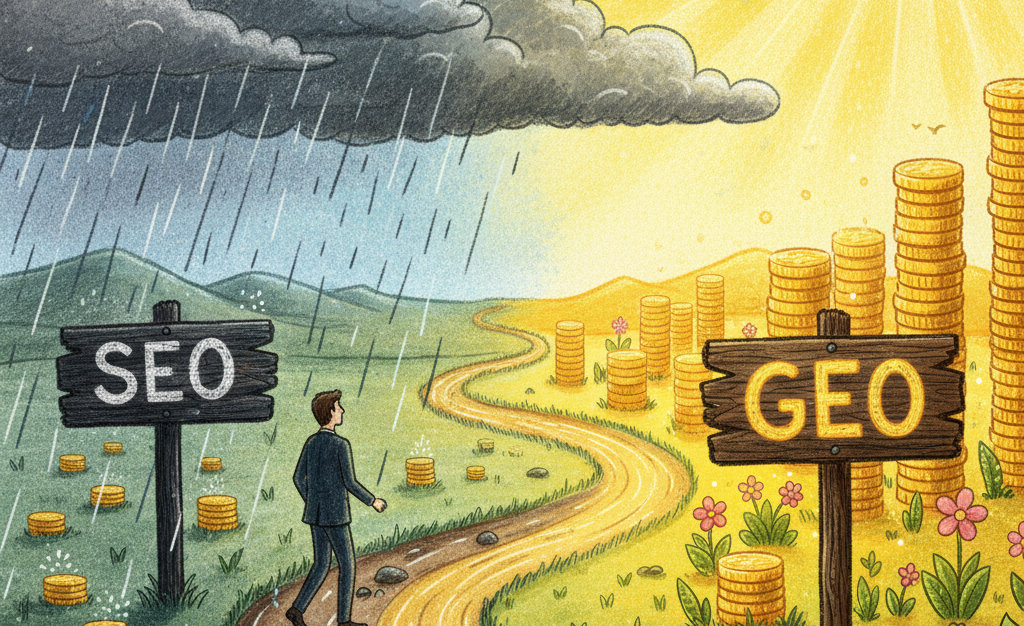
This isn’t about abandoning SEO. It’s about layering a new skill on top. Think of SEO as building the stage, while GEO makes sure your spotlight shines when AI answers the audience.
So, how do you move from just being searchable to being citable by AI? Let’s take this journey step by step.
The Big Shift Why SEO Alone Won’t Save You
Traditional SEO has always been about one goal: getting your website to appear as high as possible in the search results. But AI has rewritten the rules. When users ask questions, they don’t scroll anymore; they read the AI-generated response sitting at the top.
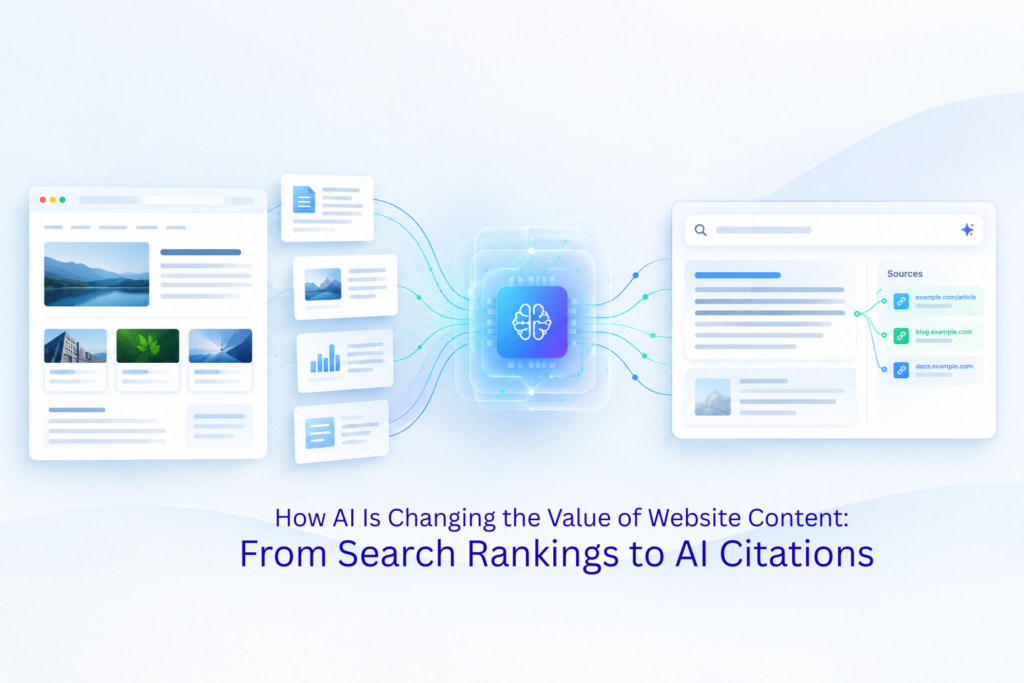
Here’s the catch: those AI answers don’t just appear magically. They’re stitched together from sources the AI trusts. If your content isn’t one of those sources, it doesn’t matter if you’re ranked #2 or #10. You’re invisible.
It’s a bit like hosting a grand party where everyone gathers in the living room, but your band is still playing in the garage. No matter how good your music is, nobody hears it unless you’re inside the main room. That “main room” is now the AI overview.
That’s why SEO alone won’t cut it anymore. You need GEO to walk your brand into the spotlight.
GEO Explained Making Friends With the Machines
At its heart, Generative Engine Optimization is about teaching AI to recognize, trust, and cite your content. Instead of just convincing algorithms that your page deserves a blue link, you’re now convincing AI that your words are the right ones to use in its answers.
Think of AI as a super-fast reader in a library. It’s flipping through hundreds of books at once. If your book has a clear title, easy-to-skim chapters, and straightforward definitions, the AI is more likely to grab your lines and quote you.
That’s GEO in action. It’s not replacing SEO – it’s enhancing it. Together, they form a two-layered armor: one that keeps you visible in traditional rankings and another that ensures AI includes you in its answers.
Start With an Audit Don’t Assume, Confirm
Before making any changes, you need to know where you stand. Many businesses assume they’re visible because they rank well in search. But visibility in generative AI is a different story.
Run a visibility check:
- ◙ Ask common industry questions in Google’s AI overview or Bing Copilot.
- ◙ Note whether your brand is cited in the responses.
- ◙ Test multiple queries, not just your main keywords.
This step is like turning on the lights in a dark room. You can’t fix what you don’t see. If your name shows up frequently, great. If it’s absent, you know you’ve got work to do. And if it’s partially there, you’re in the middle – which still means opportunity is being left on the table.
Auditing isn’t glamorous, but it’s crucial. It gives you the reality check you need before you start reshaping your strategy.
Reading the Signals What Your Audit Really Tells You
Once you’ve run an audit, the results speak volumes. If your brand shows up consistently, it means AI already considers you a trusted source. But don’t relax just yet – competitors are working hard to knock you out of that spot.
If your presence is patchy, that’s a signal. Maybe your content isn’t comprehensive enough, or your answers are buried under fluff. And if you’re nowhere to be found, it doesn’t mean the game is over. It just means your content hasn’t been packaged in a way AI can quickly understand.
Think of it like applying for a job. Being fully cited is like already having your resume on the hiring manager’s desk. Being partially cited is like sitting in the waiting room. Being absent? Your resume is lost in the mail. The goal is to make sure AI always has your “resume” ready to pull from.
GEO Tactics How to Become AI’s Go-To Source
So, what can you actually do to improve your chances of being cited by AI? Here’s a breakdown of practical steps that agencies and businesses are finding useful:
Lead With the Answer
AI loves clarity. Instead of burying the answer in paragraph three, put it right up front. This doesn’t mean sacrificing creativity – it means offering the solution first, then building context around it.
Be Crystal Clear With Entities
If your brand or product name isn’t explained clearly, AI may misinterpret it. Use simple, unmistakable definitions. Treat your content like a dictionary entry: crisp, direct, and easy to quote.
Build Fast Paths
Long-winded content without structure confuses AI. Break your information into short sections, bullet points, or step-by-step explanations. The easier it is to extract, the higher your chances of being cited.
Comparison Content Works Wonders
AI often compares options when answering. If your content fairly contrasts different tools, services, or strategies, it positions you as an authority. Just make sure the comparisons are balanced and helpful, not biased pitches.
Reputation Still Matters
Backlinks, brand mentions, and positive sentiment remain powerful. AI doesn’t just look at what you wrote; it checks if others trust you too. Building credibility outside your site feeds into GEO success.
Each of these tactics is a steppingstone, and together they build a path straight into the AI’s knowledge vault.
GEO and SEO Better Together
Here’s the truth: GEO isn’t replacing SEO anytime soon. Instead, it’s layering over it. You still need optimized meta tags, fast-loading pages, and keyword-rich content. But GEO makes sure that content isn’t just read by humans – it’s quoted by machines.
Imagine SEO as the foundation of a house. It gives you stability, structure, and a place to stand. GEO is the roof that keeps you visible when the storm of AI answers rains down. Without the foundation, the roof collapses. Without the roof, the foundation gets soaked. Together, they’re unstoppable.
Keep Evolving Because AI Never Sleeps
One of the hardest truths about GEO is that it’s not a “set it and forget it” strategy. AI engines evolve constantly, and so does their way of sourcing answers.
This means ongoing tracking is non-negotiable. Monitor when your brand is cited, how often, and in what context. Keep an eye on competitors – if they start showing up more than you, it’s a sign to adjust.
Think of GEO like fitness. You don’t just hit the gym once and declare yourself healthy forever. You maintain, adapt, and improve continuously. The same applies here.
Real-World Mini Case Studies
Let’s make this more concrete with a couple of examples.
Case 1: The Niche Tech Blog
A mid-sized tech blog noticed its traffic dipped by 30% after AI overviews rolled out. When they ran an audit, they realized none of their tutorials were being cited. The fix? They restructured articles to lead with solutions, clarified product definitions, and added comparison charts. Within three months, they started showing up as a cited source in AI answers, regaining both visibility and new referral traffic.
Case 2: The Local Fitness Studio
A local gym wanted to attract more sign-ups but wasn’t showing up in generative responses. They began publishing content that answered common fitness questions directly – “How many calories does yoga burn?” or “Best workouts for beginners.” Because their answers were concise and structured, AI engines started citing them for local users. Not only did visibility increase, but so did memberships.
These examples prove one thing: you don’t have to be a giant brand to make GEO work. You just need to package your knowledge in ways AI can easily digest.
Your First 3 Steps Action Plan
Ready to dip your toes into GEO? Here are three simple actions to get started today:
- ◙ Audit your presence. Run at least 10 common queries in AI-powered search and check if your brand is mentioned.
- ◙ Refine one key page. Take a high-performing page and restructure it with GEO tactics: lead with the answer, clarify entities, add comparisons.
- ◙ Track changes. Monitor whether citations appear after a few weeks. Note competitor mentions too, so you can adjust your content accordingly.
This mini action plan is your starter kit. Once you see results, you can scale GEO efforts across your site.
The Road Ahead Turning Knowledge Into Action
We’re standing at the edge of a massive shift in digital marketing. SEO got us here, but GEO is what will carry us forward. The businesses that adapt now will have a serious advantage when AI-driven answers become the norm.
So, don’t wait until your traffic dips or your brand disappears from the conversation. Start auditing. Refine your content. Lead with answers. Speak clearly, both for humans and for machines.
The spotlight is moving, and GEO is how you step into it. Those who adapt will stay visible. Those who don’t will fade into the background of AI’s endless scroll.