




Do You Really Need a CMS Anymore? (2026 Edition)
Hey, let’s be real for a sec.
For the last 20 years, if you wanted a website, the answer was always the same: grab a CMS. WordPress, Joomla, Drupal – pick your poison and off you went.
That made total sense… back then.
But we’re in 2026 now, and the web has quietly flipped the script. So I’m asking the question nobody wants to say out loud:
Do you actually still need a full-blown CMS?
Spoiler: For a TON of sites, the answer is nope.
The Original Problem CMS Solved (And Why It Mattered)
Back in the early 2000s, building a website sucked if you weren’t a coder:
- ● Every edit meant messing with raw HTML files
- ● Updating anything required redeploying the whole site
- ● Scaling content? Nightmare fuel
CMS platforms swooped in like superheroes and gave us:
- ● Drag-and-drop visual editors
- ● Databases that let content live dynamically
- ● Plugins for everything under the sun
They turned static files into actual applications. Game-changer. No debate.
But Here’s the Thing… The Web Architecture Has Changed
Fast-forward to today. The constraints that made CMS necessary? Mostly gone.
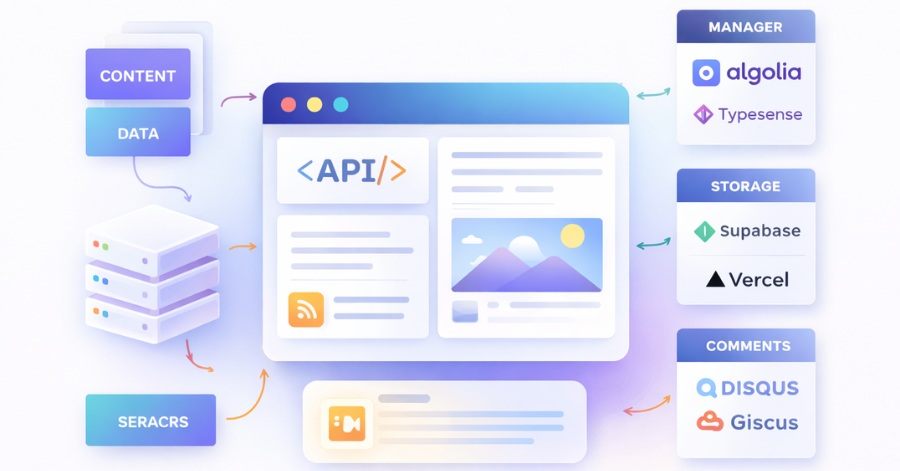
You can now build killer sites with:
Static sites pre-build your HTML once and serve it lightning-fast from the edge. No server spinning up for every visitor. No database calls. Just pure, pre-baked goodness.
And yeah, that shift is a big deal. Dynamic CMS sites still generate pages on the fly. Static ones? Already done.
What You Actually Gain by Ditching the CMS
This isn’t just “simpler.” It’s a whole different vibe. Here’s the real-world payoff:
“But What About All the Features?!”
This is the classic pushback –and it used to be fair.
Not anymore.
Modern stacks give you (and often beat) the old CMS tricks using composable tools:
Even “headless CMS + static” setups are popular now, but for smaller teams they often add complexity instead of removing it. Real talk.
The Real Trade-Off: Static vs Dynamic (Quick Comparison)
Static wins on speed, security, and sanity.
CMS still wins when you need frequent non-tech edits or real-time user stuff.
The Competitive Landscape Has Shifted
It’s no longer “WordPress vs Drupal vs Joomla.”
Now it’s CMS vs Everything Else:
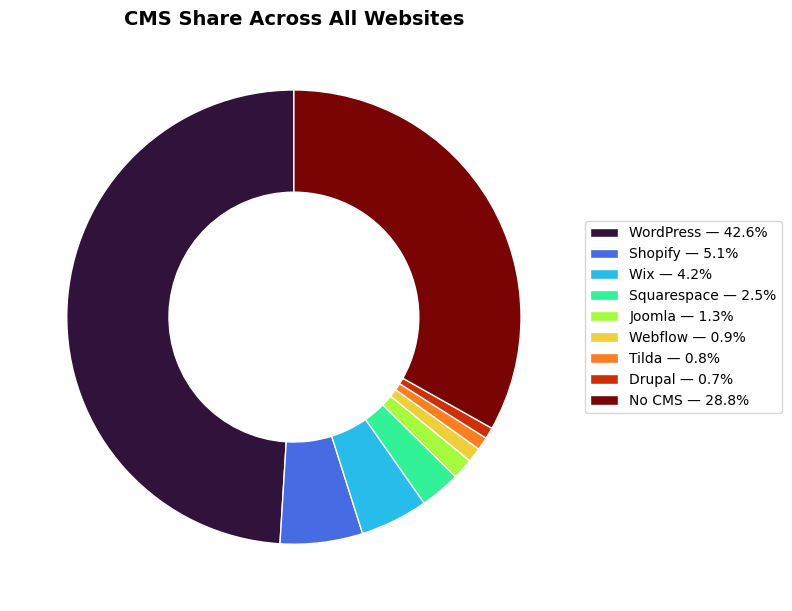
WordPress still powers ~42–43% of the entire web in 2026, but its share is actually dipping for the first time in years. People are voting with their feet toward simpler, faster options.
Here’s what the actual numbers look like right now (March 2026):
1. CMS Share Across All Websites
This chart shows the big picture – including the growing number of sites that use no traditional CMS at all.
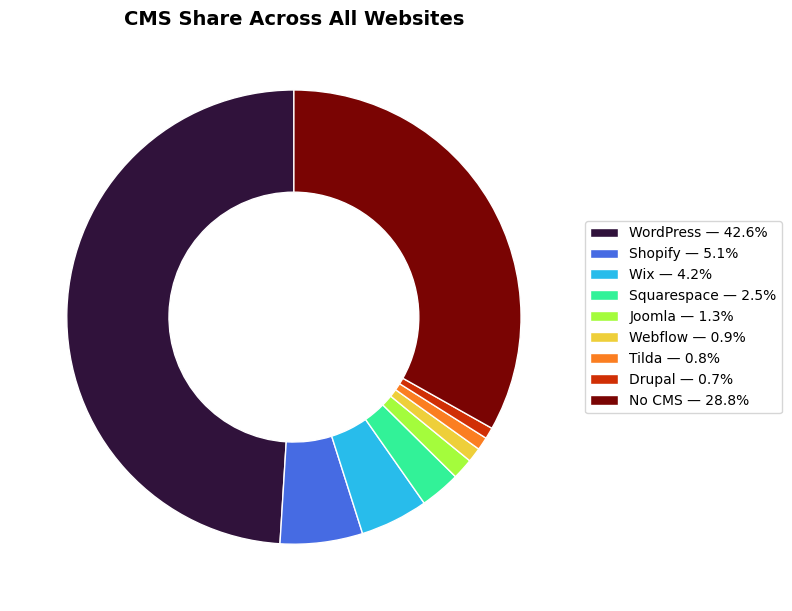
2. Share of CMS Market
This one zooms in on only the websites that do use a CMS. WordPress still completely dominates this space.
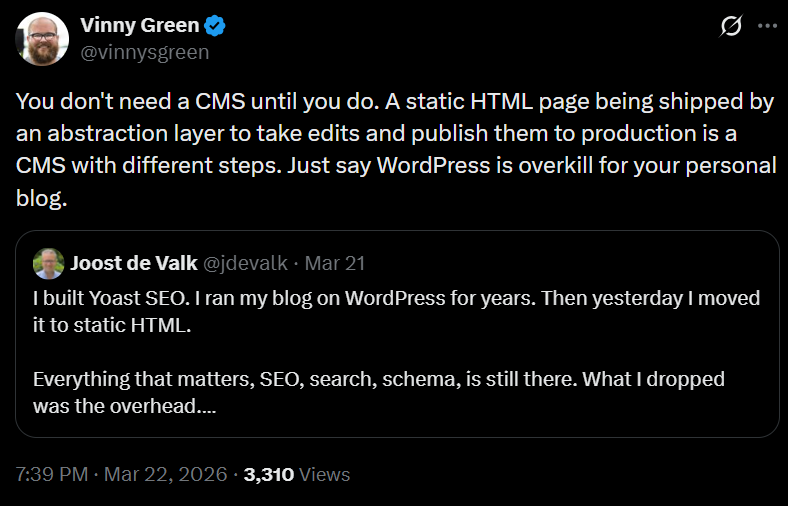
On X (formerly Twitter) and dev communities, the conversation has gotten brutally honest lately.Just last week, Joost de Valk (the guy who built Yoast SEO) dropped his own blog from WordPress to plain static HTML. His takeaway? “Everything that matters – SEO, search, schema – is still there. What I dropped was the overhead. Do you actually need a CMS? For quite some sites: no.”
Others are echoing the same vibe:
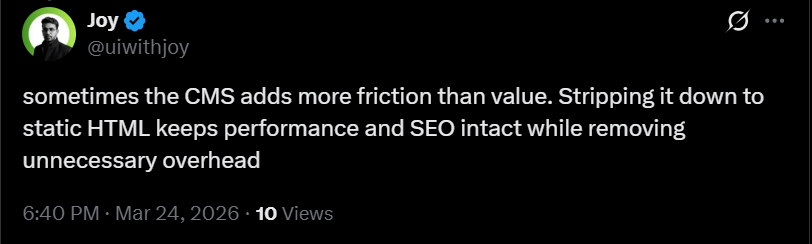
- ● “Sometimes the CMS adds more friction than value. Stripping it down to static HTML keeps performance and SEO intact while removing unnecessary overhead.”
- ● “There’s always been static sites. It’s just now we don’t need the overhead of a CMS.”
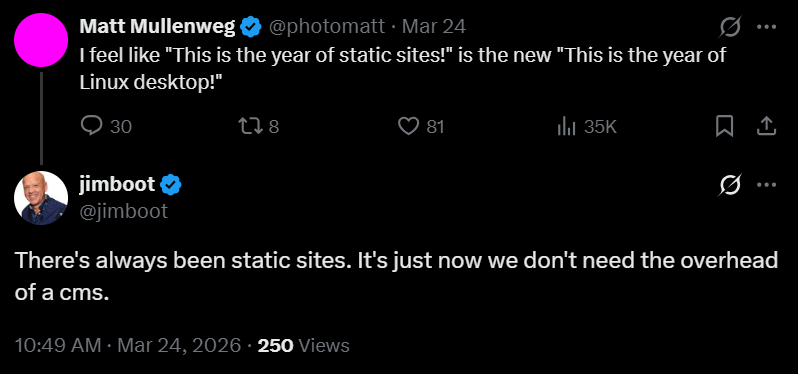
- ● Developers switching from WordPress to Astro/Next.js say things like “I don’t understand why anybody would still use WordPress and drag-and-drop builders for simple sites.”
WordPress still powers around 42.6–43.5% of all websites in early 2026 (depending on the tracker), holding roughly 60% of the CMS market. But its share among new projects is softening as static and no-code options eat into the “simple site” space.
The AI Disruption Nobody’s Fully Ready For
Here’s the part that’s quietly blowing up the whole game.
The real “magic” of a CMS was always the admin dashboard for non-tech folks.
But AI is eating that alive.
Instead of logging in, clicking menus, and editing fields… you can now just say:
“Hey AI, update the pricing table on the homepage and make the new plan pop more.”
The AI can:
- ● Edit the Markdown/source files
- ● Commit the change
- ● Trigger a global deploy
Boom. Done.
Tools and agents are already doing this in 2026. The old-school CMS dashboard? It’s starting to feel… optional.
Community Take on AI + Static
People on X are already connecting the dots:
- ● One founder asked how to give clients visual editing without “adding a backend CMS that’s overkill for mostly static text.”
- ● Another shared: “I started with WordPress… it was overkill – PHP, MySQL, plugin updates… all for a blog that’s basically static content. And the worst part? WordPress doesn’t play well with AI tools at all.”
- ● Multiple devs mentioned using AI directly on Markdown/Git-based sites and loving how it removes the need for a traditional admin panel.
So When Do You Still Need a CMS?
They’re not dead. They’re just not the default anymore.
You probably still want one if:
- Multiple non-tech editors need workflows, approvals, and permissions
- Content changes constantly (daily blog, news site, etc.)
- You need real user accounts, carts, dashboards, or live interactions
- You’re building a full web app, not just a website
That’s where the complexity pays off.
The Better Question in 2026
Stop asking “Which CMS should I pick?”
Start asking: Do I even need a CMS at all?
If your site is:
- A marketing landing page
- A company “about us” hub
- A personal blog
- Documentation or a portfolio
…then yeah, a full CMS is probably overkill. You’re not running a content empire—you’re just publishing stuff.
You need a faster, simpler, more secure way to get your words (and ideas) out there.
The web evolved. Maybe it’s time your workflow did too.
Whew, that felt good.
Conclusion: The Future Is Simpler (and Smarter)
The web has evolved, and for a huge number of websites in 2026, a traditional CMS is simply more than you need. Static + Git + edge hosting already gives you speed, security, and sanity that old-school platforms struggle to match.
And with AI stepping in, even the last big advantage of a CMS – the friendly admin panel for non-tech users – is getting replaced by natural conversation and instant deploys.
If you’re tired of plugin updates, security patches, and unnecessary complexity, it might be time to let go of the old “you need a CMS” mindset.
Want to explore how AI can power your next website – from smart content updates to full workflow automation? Check out MindBees AI services here:
The web evolved.
Maybe it’s time your workflow did too.