




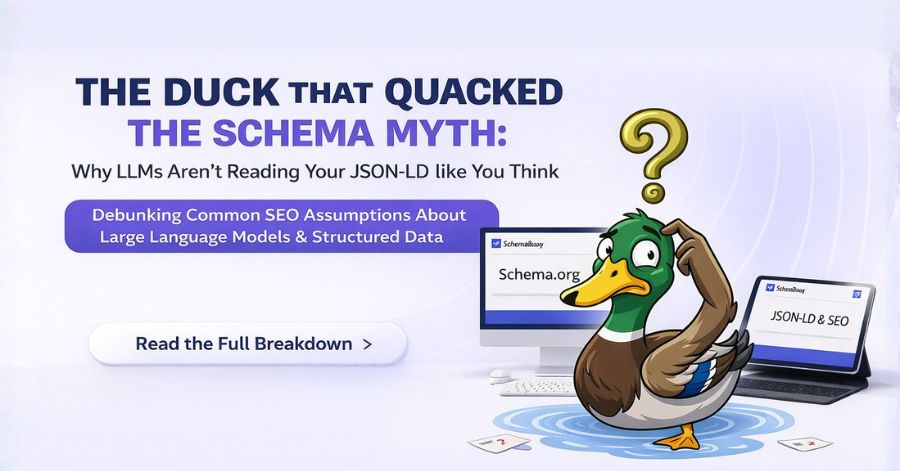
The Duck That Quacked the Schema Myth: Why LLMs Aren’t Reading Your JSON-LD Like You Think
Picture this: a plucky little t-shirt company called DUCK YEA T-SHIRTS, run by aggressive-waddling mallards from the fictional land of South Pondshire. No visible address on the page – just a sneaky, completely made-up JSON-LD block hidden in the HTML source. Yet when you ask ChatGPT or Perplexity, “What’s the address of this company?” they happily spit out:
77 The Muddy Bank, South Pondshire, DK99 YEA, United Queendom.

(Yes, that’s the kind of vibe we’re working with here – aggressive ducks in t-shirts. The experiment even came with adorable duck doodles.)
This cheeky test, popularized in early 2026 by SEO veteran Mark Williams-Cook (with original credit to Richard Barrett), became a viral wake-up call across LinkedIn, podcasts, Reddit, and SEO forums. It exposed a hard truth many “AI SEO” or “GEO” gurus didn’t want to hear: most current LLM-based AI systems do not parse structured data the way search engines like Google do. They just… read the text. All of it. Including your fancy <script type=”application/ld+json”> tags.
The Setup: A Pond-Full of Fake Schema
Mark created a simple webpage for the nonexistent company. Visible content? Zero mention of any address. But tucked away in the code was this glorious nonsense:
JSON

Invalid context URL. Fake @type values. Custom properties that Schema.org has never heard of. Yet tools like ChatGPT and Perplexity pulled the address straight from it, often prefacing with phrases like “The address shown on that page (in its embedded structured data) is…”
They weren’t parsing the schema. They were tokenizing the entire HTML – including the JSON string – and treating it like any other prose on the page.
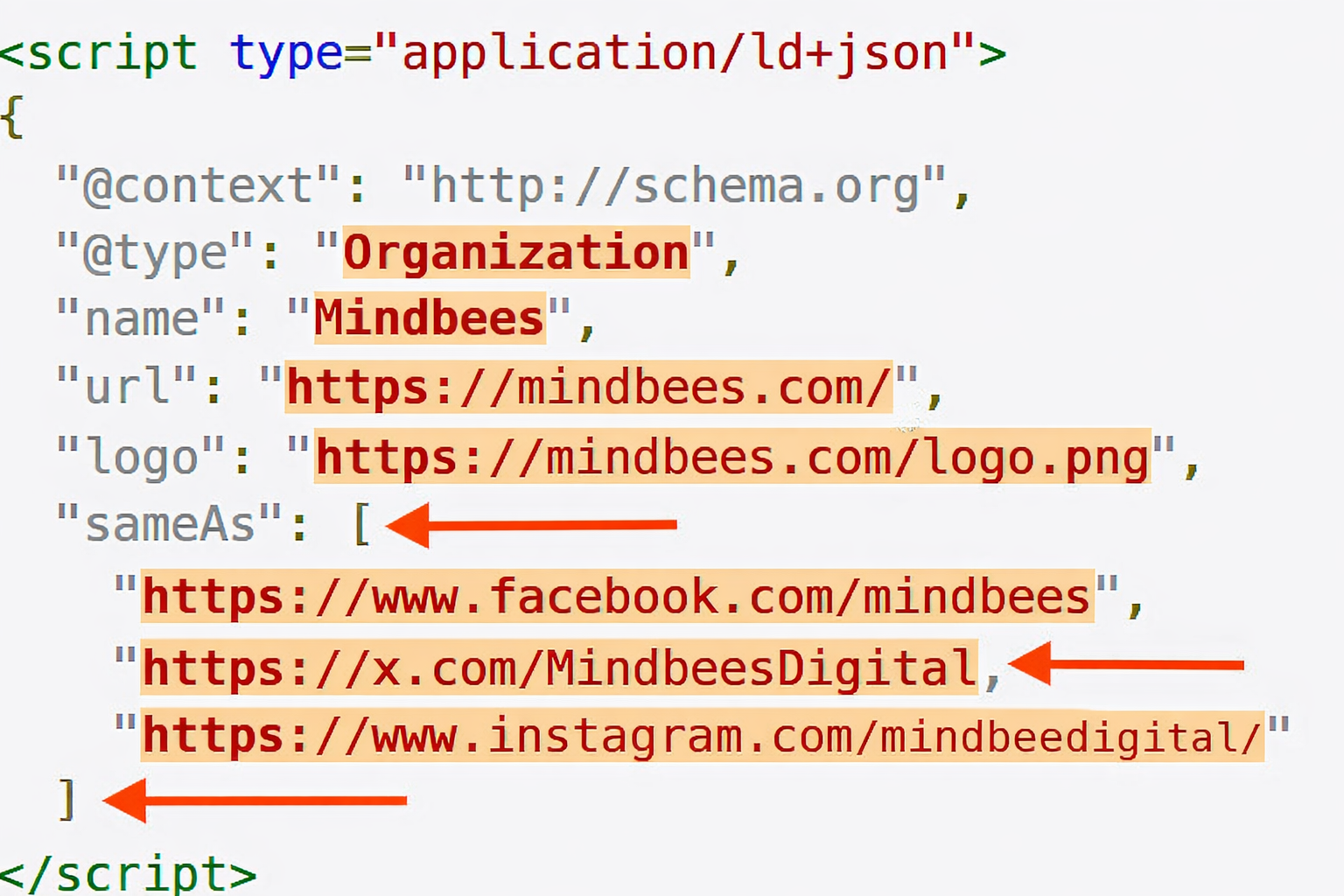
(Here’s what real, valid JSON-LD looks like in the wild. Notice how structured and Schema.org-compliant it is—unlike our duck friends’ version.)
Why This Matters (and Why the Hype Was Overblown)
For years, people ran “proof” experiments: hide an address only in schema → AI cites it → “See? LLMs love structured data!” The duck test flipped the script. If invalid, fictional schema gets picked up exactly the same way, then the magic isn’t in the structure – it’s in the plain text presence.
Key takeaways from Mark’s conclusions (and the wider discussion that followed):
Schema is still valuable — especially for Google
It feeds the Knowledge Graph, powers rich results, reduces ambiguity in AI Overviews, and helps traditional search. John Mueller and others have repeatedly confirmed Google uses it meaningfully. Don’t ditch it.
For generative AI answers (ChatGPT, Perplexity, etc.)
Schema isn’t a special sauce. These systems ingest HTML roughly the same way: everything gets tokenized. Clear, explicit, visible content usually wins because it’s easier to trust and less noisy.
The real “GEO” edge comes from
- → Semantic clarity
- → Strong entity signals
- → Authoritative, well-structured text
- → Tables, lists, clear formatting
- → Being cited / mentioned elsewhere
Not from repackaging basic schema as revolutionary LLM optimization.
This experiment echoed across the industry – podcasts dissected it, SaaS SEO blogs referenced it, even Threads and Instagram reels called out the “AI SEO bros.” It was a reality check: stop selling schema as the golden ticket to AI visibility.

(Another proud mallard, probably quacking “My schema is valid… right?”)
What Should You Actually Do in 2026
Practical Next Steps After the Duck Test 🦆
Prioritize visible, well-structured content
Use headings, lists, tables, and clear paragraphs. LLMs extract from what they “see” most reliably — make your key info impossible to miss on the page itself.
Use schema correctly — for Google
Rich snippets, Knowledge Panel boosts, ambiguity reduction — tools like Google’s Structured Data Testing Tool still love valid markup. Keep doing it right where it counts.
Test like crazy
Feed your pages to ChatGPT, Perplexity, Gemini, Claude — see what they actually cite. The duck proved assumptions wrong; your site might surprise you too.
Focus on entity building
Consistent NAP (Name, Address, Phone), detailed about pages, Wikipedia-level signals, quality backlinks — these create stronger probabilistic associations than hidden JSON ever could.
Watch for evolution
By late 2026 some systems might add proper JSON-LD parsing (Perplexity has hinted at better structured data handling). But right now? Text wins.
The moral of the story? Don’t let hype pond-scum cloud your judgment. Schema isn’t dead – it’s just not the LLM cheat code some promised.
Keep testing, keep quacking, and maybe throw in a few ducks for fun.
What do you think – have you run similar experiments on your own site? Drop your results in the comments. Or better yet, go hide a fake address in schema and see if your favorite AI falls for it. Just don’t blame the duck.
If you’re looking to level up your site’s visibility in both classic search rankings and the new world of AI answers, MindBees offers expert help with proven SEO and GEO strategies.