





From a Simple Wellness
Idea to an Intelligent
Health Companion
How Trackt evolved from an early concept for GLP-1 medication users into a full-fledged wellness platform powered by behavioural insights, activity data, logging, and personalized nudges.


IT STARTED WITH A SIMPLE QUESTION

How can we provide meaningful wellness support to people using GLP-1 medications?
The original idea was not to create a massive health platform. The initial vision was focused: supporting users through their wellness journey and helping them stay engaged with healthier behaviors.
Nothing about the early concept suggested the system it would eventually become. That complexity emerged naturally as the team learned more about what the users, and the product, actually needed.
- 01 Idea
- 02 Wellness Support
- 03 User Tracking
- 04 Behavior Understanding
- 05 Personalized Nudges
- 06 Full Wellness Platform
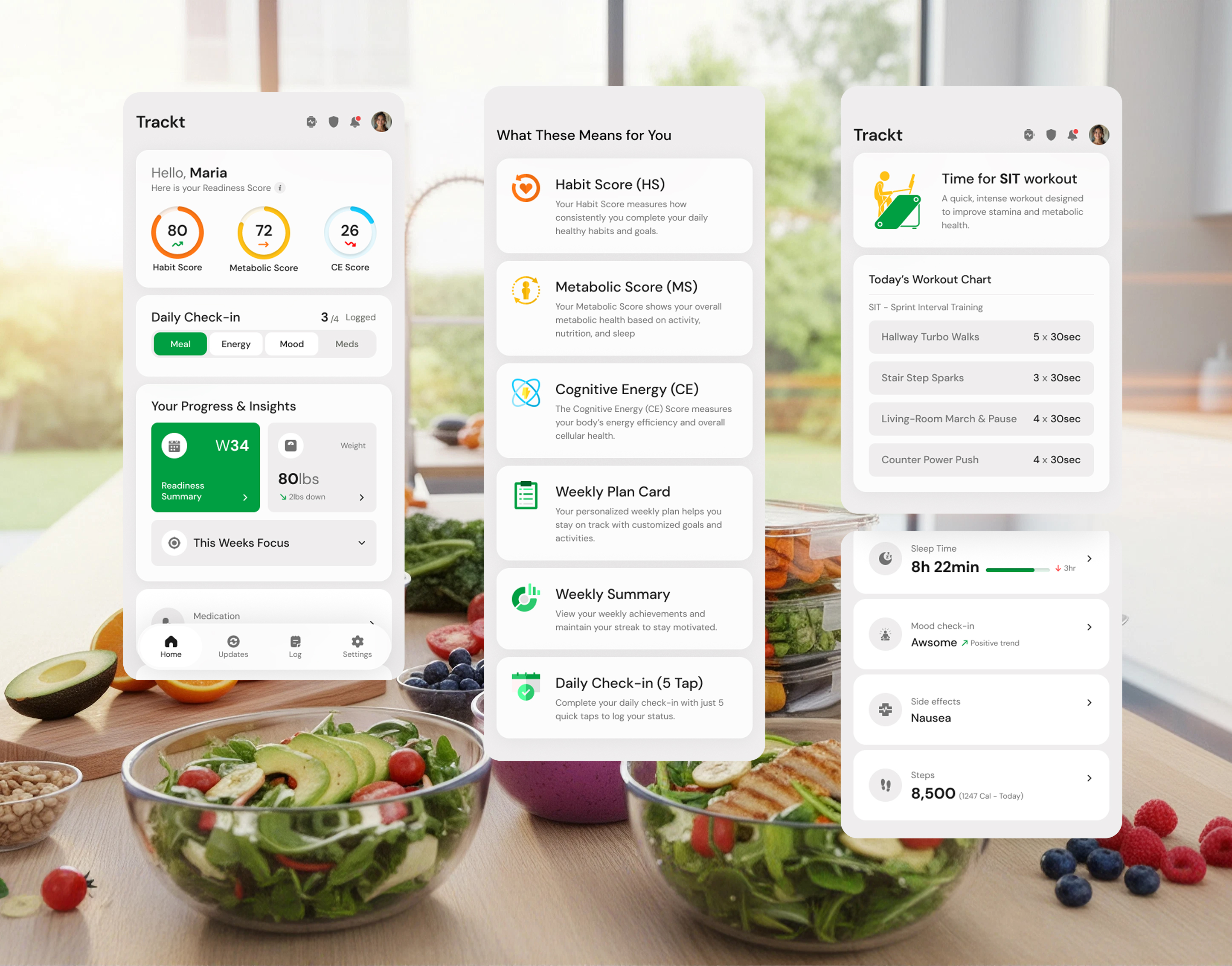
THE CHALLENGE
Trackt needed to capture daily health data without overloading users. GLP-1 therapy comes with changing appetite, nausea, and varying energy levels, making complex logging forms impractical.
The goal was to design lightweight input channels that let users record critical metrics in seconds, ensuring continuous daily engagement without tracking fatigue.
- How daily weight logs could be captured effortlessly
- How GLP-1 injection doses and schedules could be tracked safely
- How hydration and protein targets could be logged in real time
- How medication side effects could be recorded without long forms
- How energy and mood fluctuations could be checked daily
- How step counts and activity data could sync automatically
- How historical logs could remain accessible for health visits
- How the interface could stay minimal despite multi-metric logging

Collecting raw numbers is easy, but raw data alone doesn't help users adjust their habits. Trackt needed to interpret daily inputs within the context of GLP-1 medication cycles.
The focus shifted from simple data storage to understanding behavioral patterns, identifying where users struggle with hydration, protein deficiency, or dose-related side effects.
- How user behaviors could be captured over time
- How daily activity levels could be understood in context
- How energy drops could be correlated with dose timing
- How user logging habits could contribute to deeper insights
- How long-term weight trends could be separated from daily noise
- How side-effect patterns could be flagged early
- How habit gaps like low protein intake could be identified
- How complex health data could be simplified into daily feedback
Once patterns are clear, the system must decide when and how to intervene. Generic fitness apps push static alerts that get ignored or turn into annoying noise.
Trackt required adaptive logic to analyze individual schedules, dosing days, and current progress before determining the right type of guidance to deliver.
- How medication schedules could trigger timely reminder loops
- How missed log entries could be detected without nag screens
- How low hydration levels could trigger contextual prompts
- How side-effect logs could adjust upcoming recommendation logic
- How weight fluctuations could be processed calmly
- How trend boundaries could determine when support is needed
- How notification timing could respect user daily routines
- How decision rules could balance automated help with user control
Trackt needed to move beyond being a basic tracking application. Users are different, a static checklist or a generic reminder system would never provide meaningful support.
The real work was exploratory. Before the product could support users, the team had to understand what "support" should even mean for each of them.
- How user behaviors could be captured
- How daily activity could be understood
- How energy levels could be considered
- How user logging could contribute to insights
- How patterns could be identified
- How nudges could become more relevant
- How guidance could adapt to dose adjustment days
- How the experience could stay simple despite growing complexity

BUILT THROUGH COLLABORATION, NOT IN ISOLATION
The final product was the result of close, continuous collaboration between the client and the product, design, and development team. Requirements evolved as the team explored the product — and that was the point.
The product grew through conversations. Every iteration brought new understanding, and every new understanding influenced what we built next.


Regular product discussions

Requirement clarification

Design reviews

Prototype feedback

Development reviews

Technical feasibility discussions

Behaviour & algorithm discussions

Iterative refinement

Testing & validation
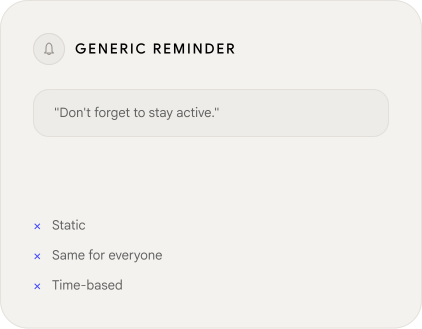
FROM NOTIFICATIONS TO MEANINGFUL NUDGES
 Nudge
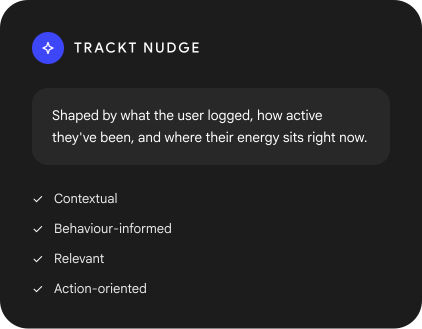
Nudge
The goal was never to simply send reminders. A nudge should be based on what the system understands about the user's behaviour and current state.

EVERY SCREEN HAD A CONVERSATION BEHIND IT
A look at how the iterative process played out across key parts of the experience — representative of the design conversations that shaped the product.
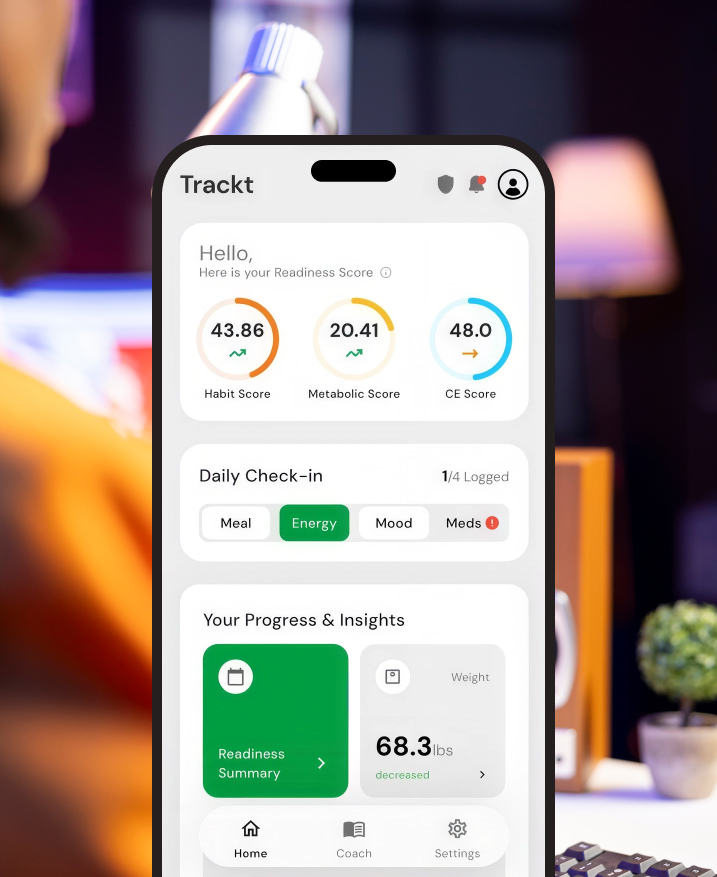
THE DASHBOARD

Early concepts presented information without a clear hierarchy, where every metric competed for attention at once.

The team prototyped layouts balancing daily status with long-term metabolic patterns, testing how much data a user actually needs at a glance.

Through design reviews and feasibility discussions, the structure was repeatedly refined toward a calmer, highly focused composition.

Complex health information feels simple and approachable the moment the app opens.
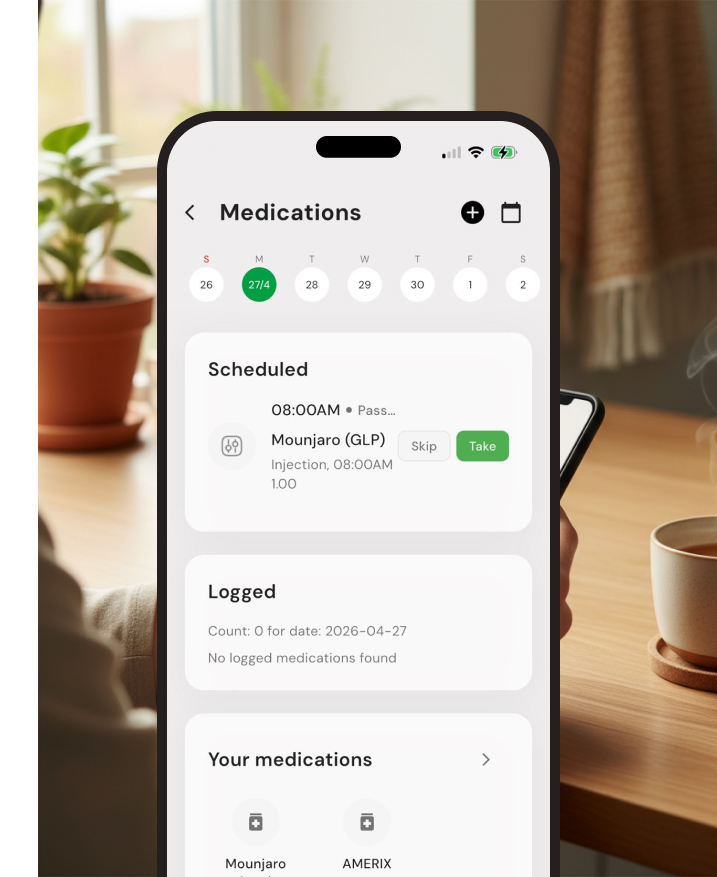
THE LOGGING FLOW
Logging only works if it is fast. Every extra step risked users experiencing tracking fatigue and dropping the habit entirely.
Different input patterns were tested, comparing free-form entries against structured, 5-tap guided logging.
Feedback cycles reduced the logging flow to its absolute essentials, favoring sensible defaults and swift tap actions.
Logging fits seamlessly into the day instead of interrupting it.
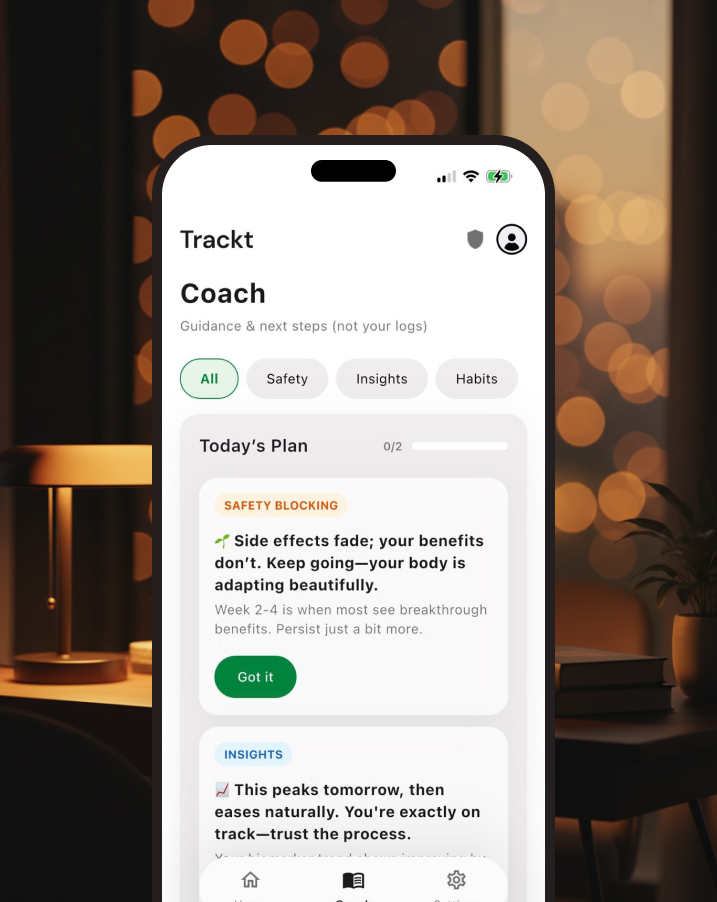
THE NUDGE EXPERIENCE
Early medication and habit reminders felt generic, making them easy to ignore alongside routine notifications.
The team experimented with message timing, tone, and how much health context a nudge should carry.
Nudges were tied directly to real-time behavioral signals and dose schedules rather than fixed, arbitrary clocks.
Nudges read as timely, supportive guidance rather than background noise.
WHAT USERS DON'T SEE
The polished application is only the visible layer. Beneath it sits the less visible work that made the experience possible.

"A simple interface can hide a very sophisticated system underneath."


FROM IDEA TO PLATFORM
The Starting Point
- Simple wellness support
- Focused use case
- Basic tracking concept
- Early product idea


What It Became
- Full-fledged wellness application
- Behaviour-aware experience
- Algorithm-driven decision logic
- Personalized nudges
- Structured logging
- Scalable product foundation

THE RESULT
Measured not in numbers, but in what the product became — and what it is now capable of becoming next.

"The biggest transformation wasn't visual. It was conceptual."

"TrackT went from an idea about supporting users to a product designed to understand them — and respond more meaningfully to them."

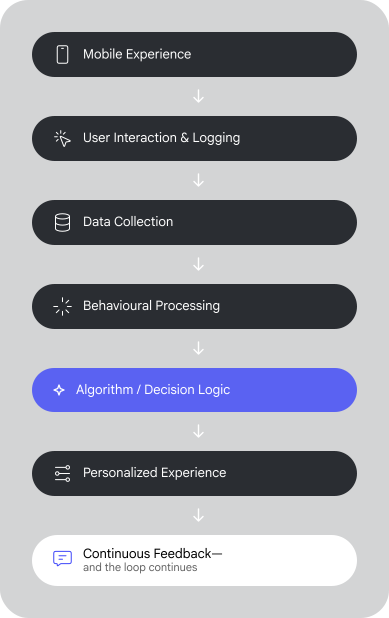
THE SYSTEM
BENEATH THE
EXPERIENCE
A conceptual view of how the product fits together — from what the user touches to the logic that shapes what they see next.

WHAT WE LEARNED BUILDING TRACKT
Simple ideas can become sophisticated products when you keep asking better questions about real user needs.

True personalization requires understanding human behavior and daily context, not just collecting raw health metrics.

The best product decisions and feature flows often emerge naturally through hands-on prototype iteration.

Complex background technology should create a simpler, calmer user experience, never a more complicated one.

Strong client-team collaboration can fundamentally improve product direction and speed up release cycles.
